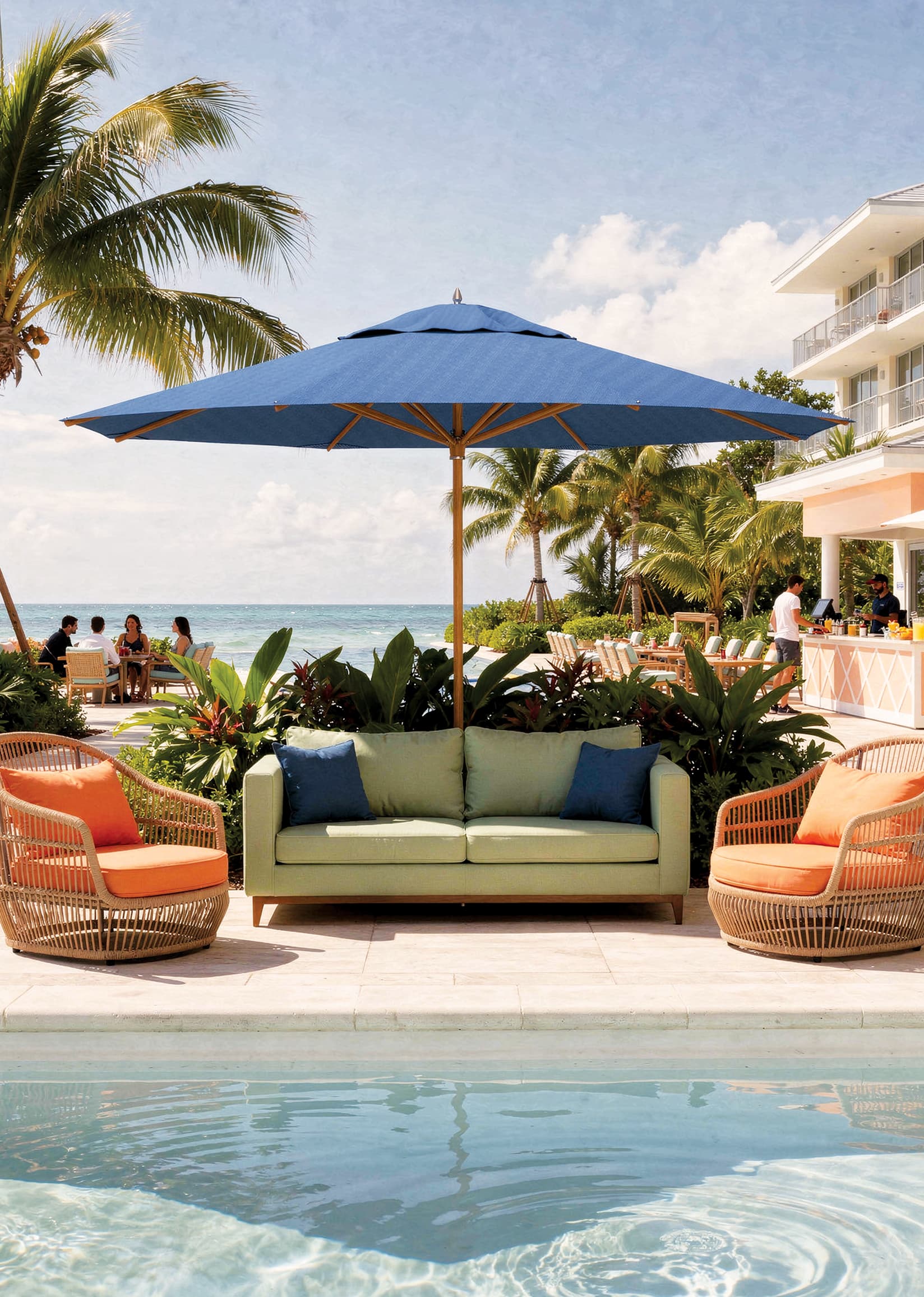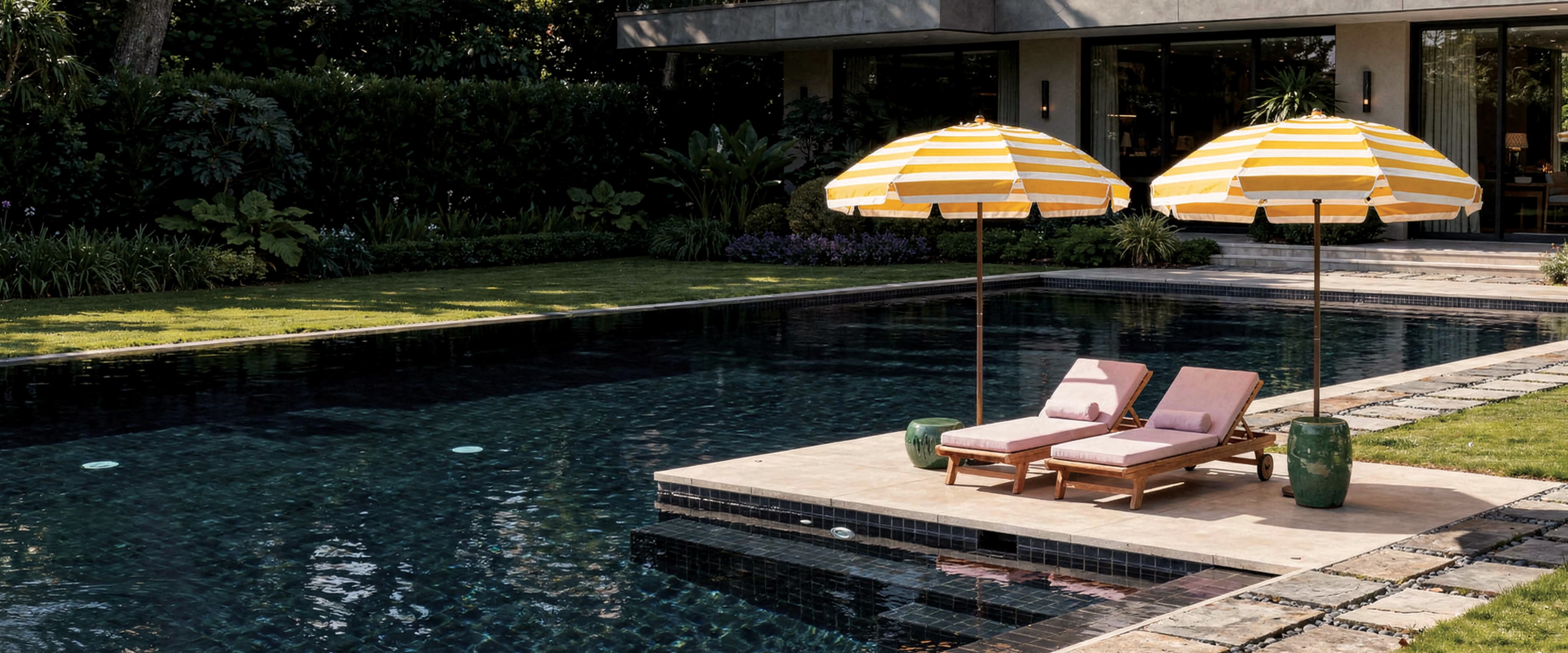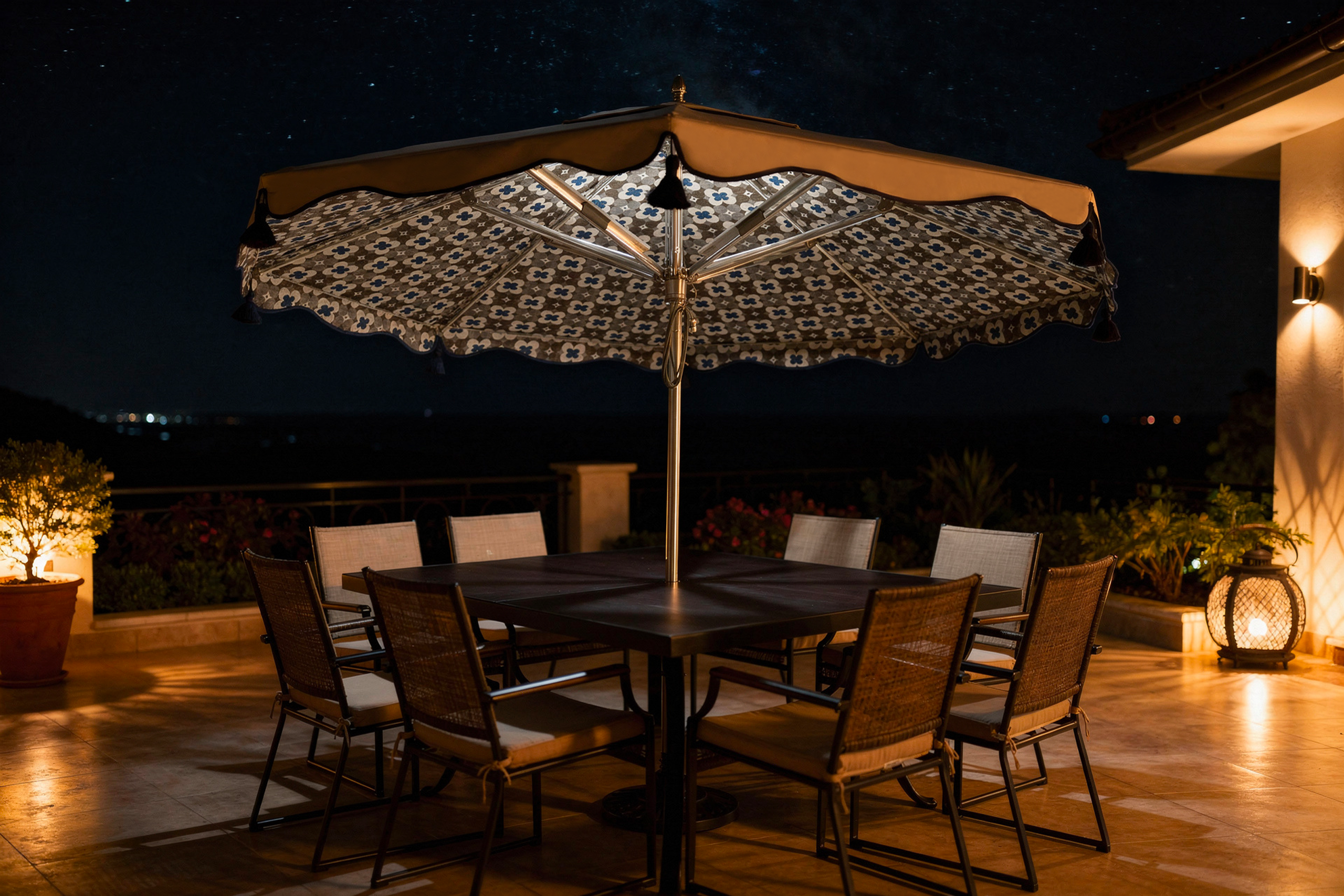
Choosing a fabric might be the most enjoyable part of designing your umbrella. It’s where the practical decisions give way to color, pattern and personality; it’s where an umbrella can become an intentional part of the space around it.
But there’s more to a great umbrella fabric than finding a color you love.
The fabric you choose affects how your umbrella looks, how it performs outdoors and, in some cases, even how your umbrellas need to be ordered. Before settling on a swatch, here are a few things worth considering.
1. Start With How—and Where—the Umbrella Will Be Used
A residential patio and a busy resort pool deck may both need shade, but they don’t necessarily ask the same things of an umbrella.
Consider how much sun and weather exposure your umbrella will receive, how frequently it will be opened and closed, and how important the umbrella is to the overall design of the space.
In hospitality and commercial environments, for example, an umbrella may spend long hours exposed to direct sunlight while also serving as a highly visible part of the guest experience. At home, color coordination with existing furniture, architecture, and landscaping may play a larger role in the decision.
The best fabric choice accounts for both.
2. Pay Attention to the Grade of the Fabric
Two outdoor fabrics can look nearly identical on a swatch and perform very differently once they spend their days outside.
That’s why Frankford pays close attention not only to the manufacturer or collection a fabric comes from, but also to its construction and intended application.
For our umbrellas, we generally recommend 9-oz awning-grade fabrics designed for demanding shade applications. The distinction matters. An umbrella canopy is constantly exposed to sun, wind, and weather in a way that cushions and other upholstered surfaces often are not.
When comparing fabrics, look beyond color and pattern. Understanding what the material was actually designed to do can tell you much more about how it will perform over time.
3. Think About Color Beyond the Swatch
That two-inch fabric sample in your hand is about to become a very large visual element.
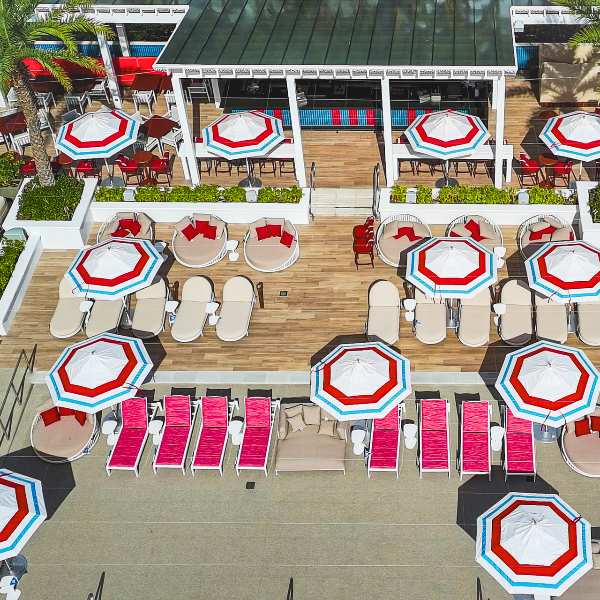
A color that feels subtle on a swatch can have a much stronger presence across an entire umbrella canopy—particularly when several umbrellas are used together. Likewise, the surrounding environment can dramatically change how a color reads.
Consider the architecture, furniture, landscaping, flooring, and other materials around the umbrella. For commercial projects, think about brand colors and the experience you want the space to create.
The goal doesn’t necessarily have to be a perfect match. Sometimes contrast is exactly what makes the umbrella work.
4. Choosing Stripes? There’s a Reason We Ask You to Order in Even Quantities
Striped fabrics introduce another consideration that isn't immediately obvious when you're selecting a pattern: how the canopy panels are cut from the roll.
Umbrella canopies are constructed from individual triangular fabric panels. With a solid fabric, those panels can be cut sequentially from the roll.
Stripes are different.
To keep the stripe pattern properly aligned across the finished canopy, our team has to pay attention to where every panel is cut. After one triangular panel is cut, the adjacent section of fabric may not produce the stripe orientation needed for the next matching panel. Instead, that section has to be skipped so another appropriately aligned panel can be cut.
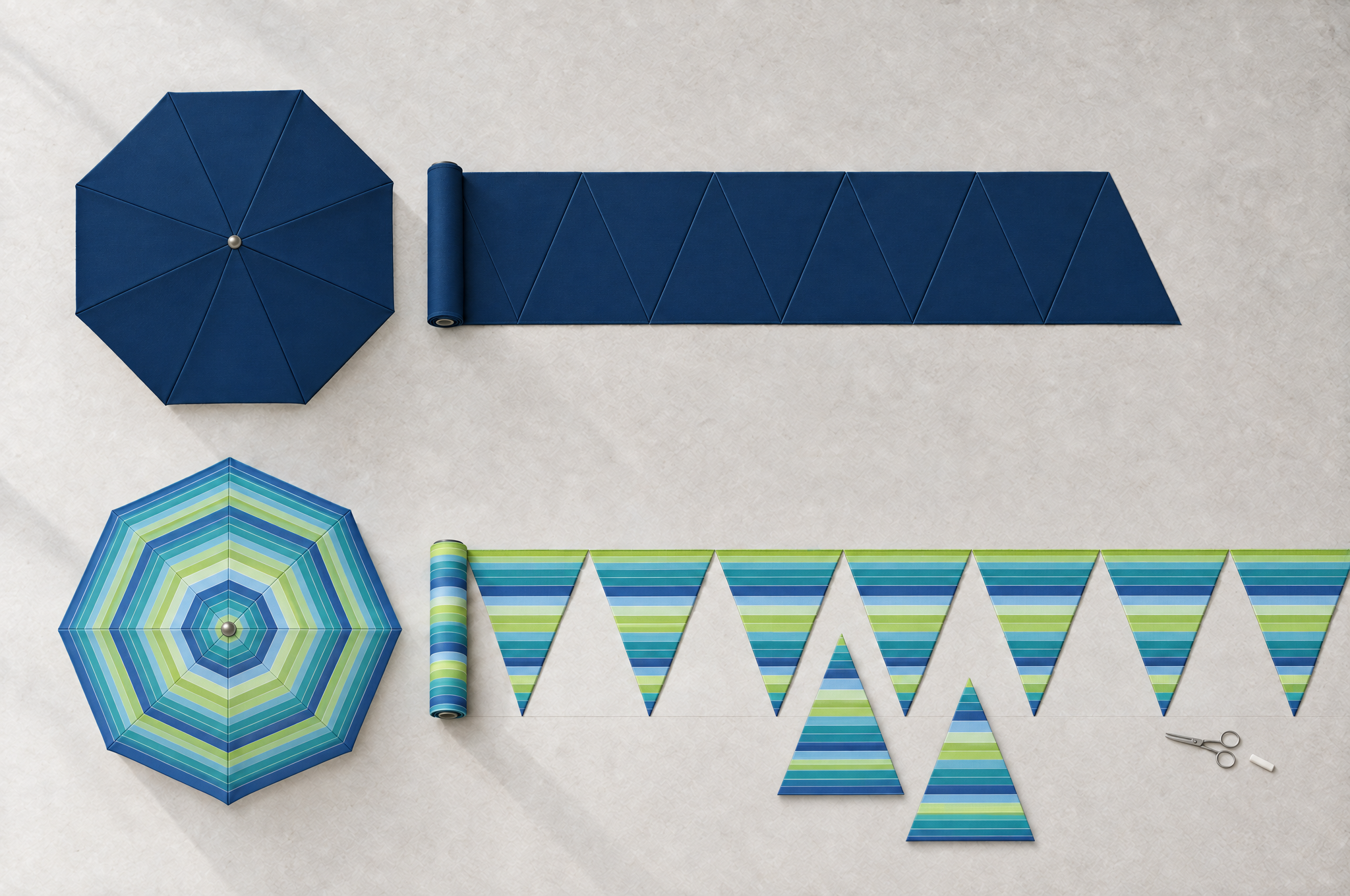
It may sound like an oddly specific rule when you first encounter it. There’s a very practical reason behind it: we want the stripes on the finished umbrella to actually look the way stripes are supposed to look.
It’s one of those small details you may never notice on a well-made umbrella, which is exactly why it matters so much to us.
5. Don't Forget About Customization
Sometimes the right fabric isn't about choosing from an existing palette at all.
For restaurants, hotels, clubs and other branded environments, custom printing can turn the umbrella canopy into an extension of the brand itself. Logos, custom colors and other design elements can create shade that feels completely integrated with the space rather than added as an afterthought.
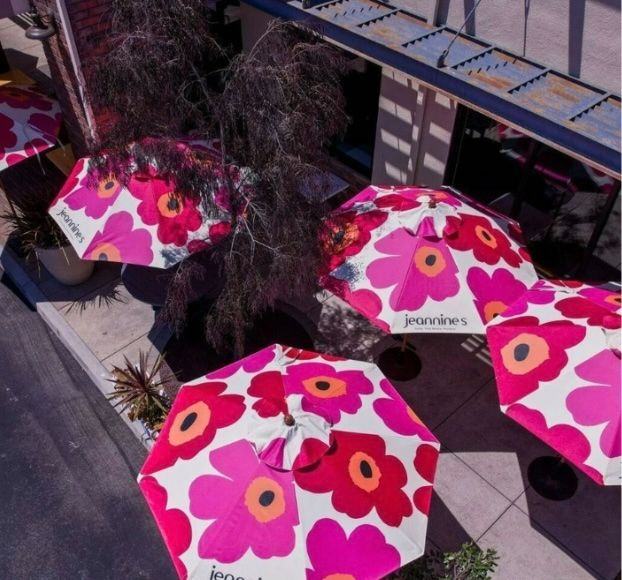
New for the 2026 season, our Alta Pagoda Shade Accent can also elevate the canopy of several of our models to new heights (literally and figuratively).
And for residential customers, the breadth of available fabrics and finishes means there’s plenty of room to create something that feels distinctly your own.
Great Shade Starts With the Details
Fabric is easy to think of as the finishing touch. In reality, it’s an important part of how an umbrella performs, how it ages, and how it contributes to the space around it. That’s why we like to think beyond the swatch.
From selecting fabrics designed for demanding outdoor environments to carefully aligning every striped canopy panel, the details that go into your umbrella matter—even the ones you'll hopefully never have to think about.
Ready to find the right fabric for your project? Explore Frankford’s fabric collection or jump into our Shade Designer to start creating today.