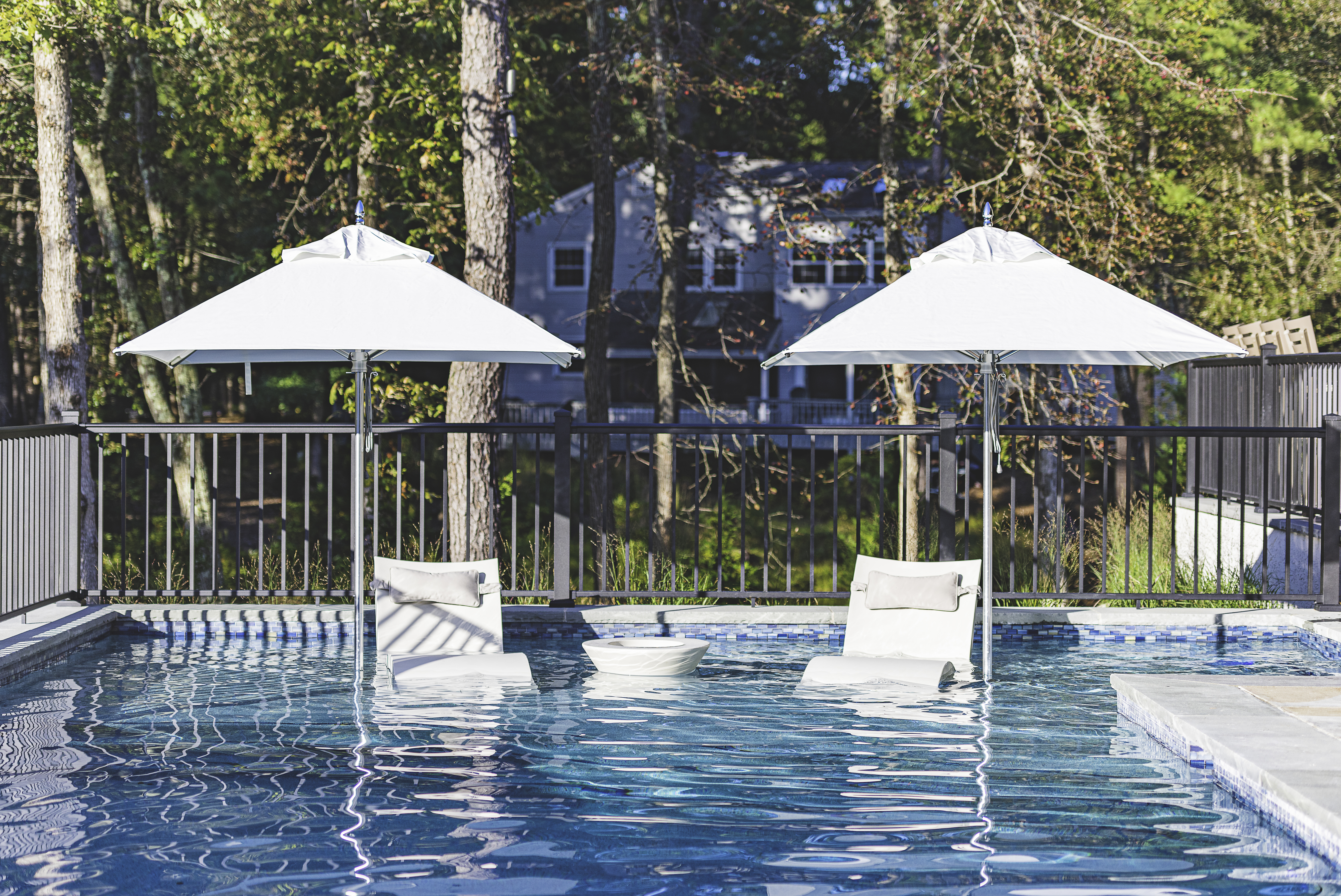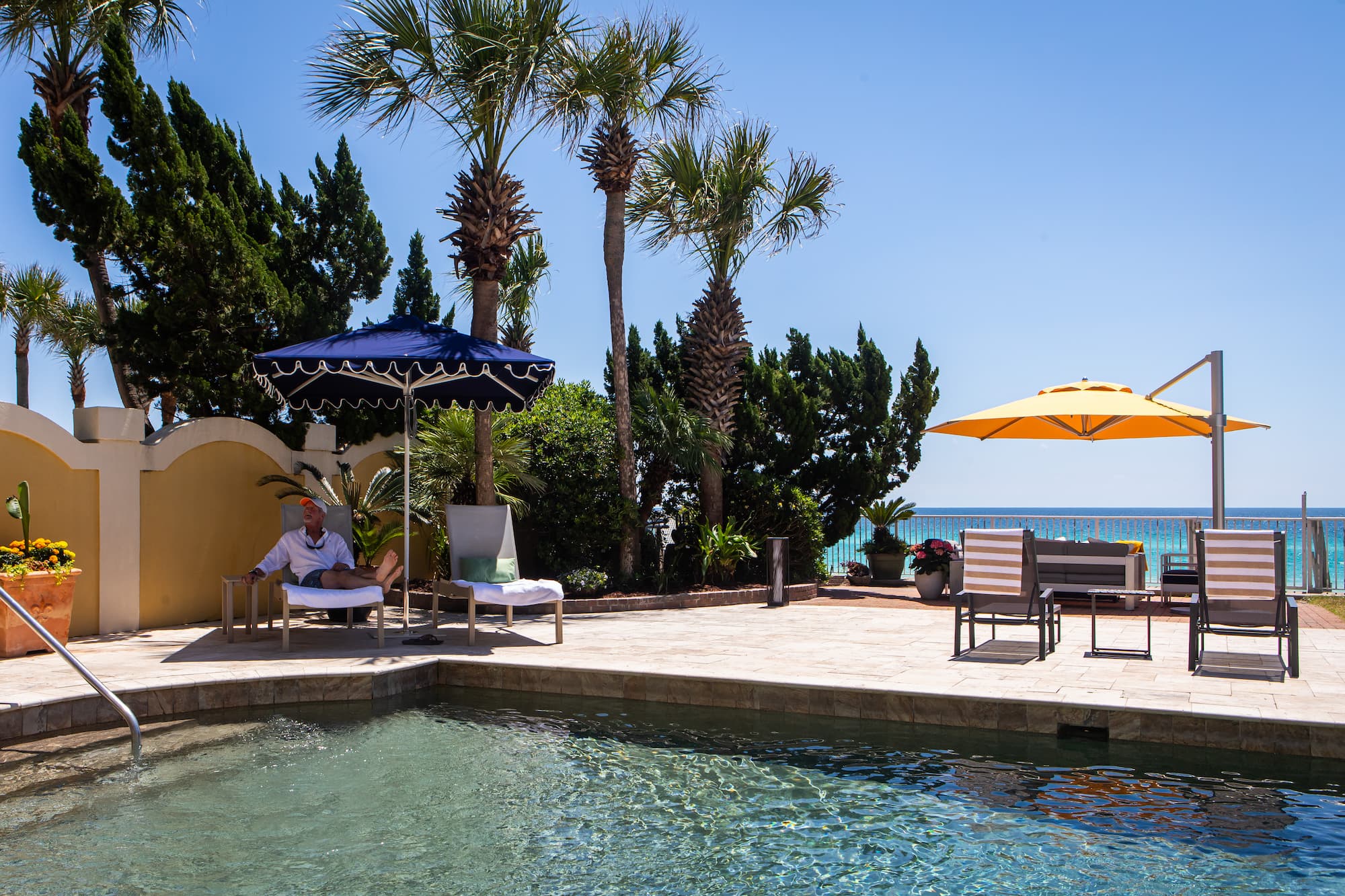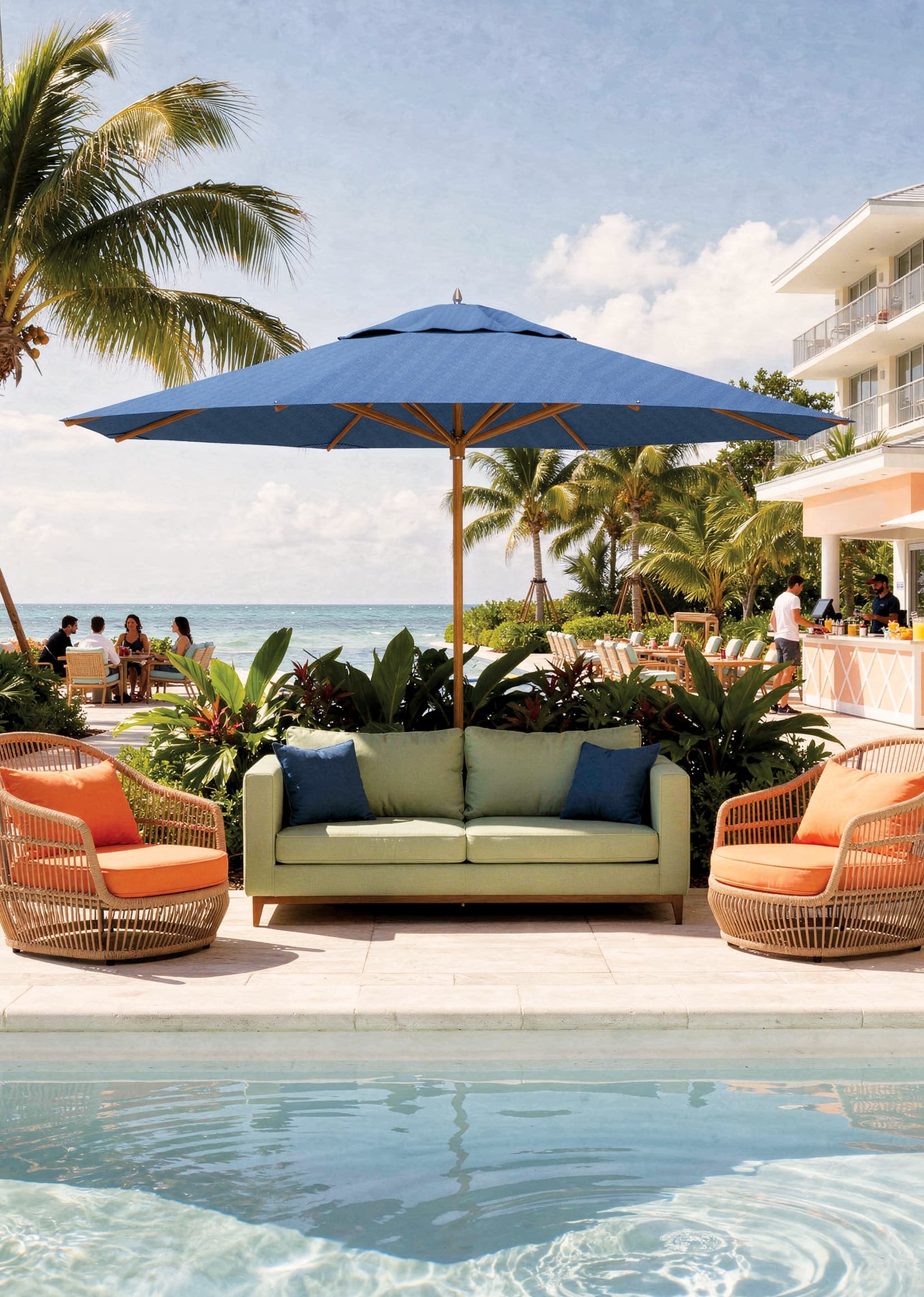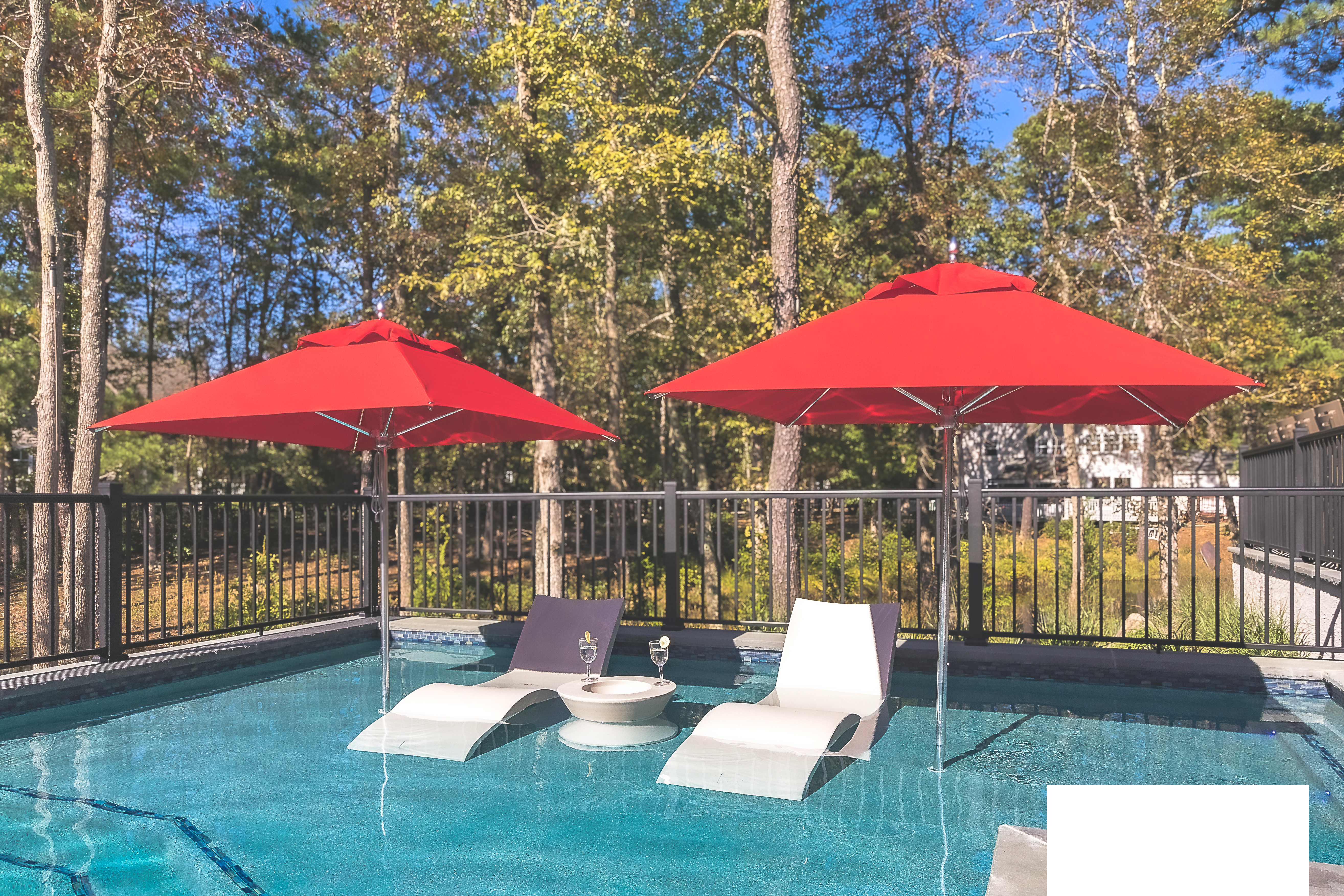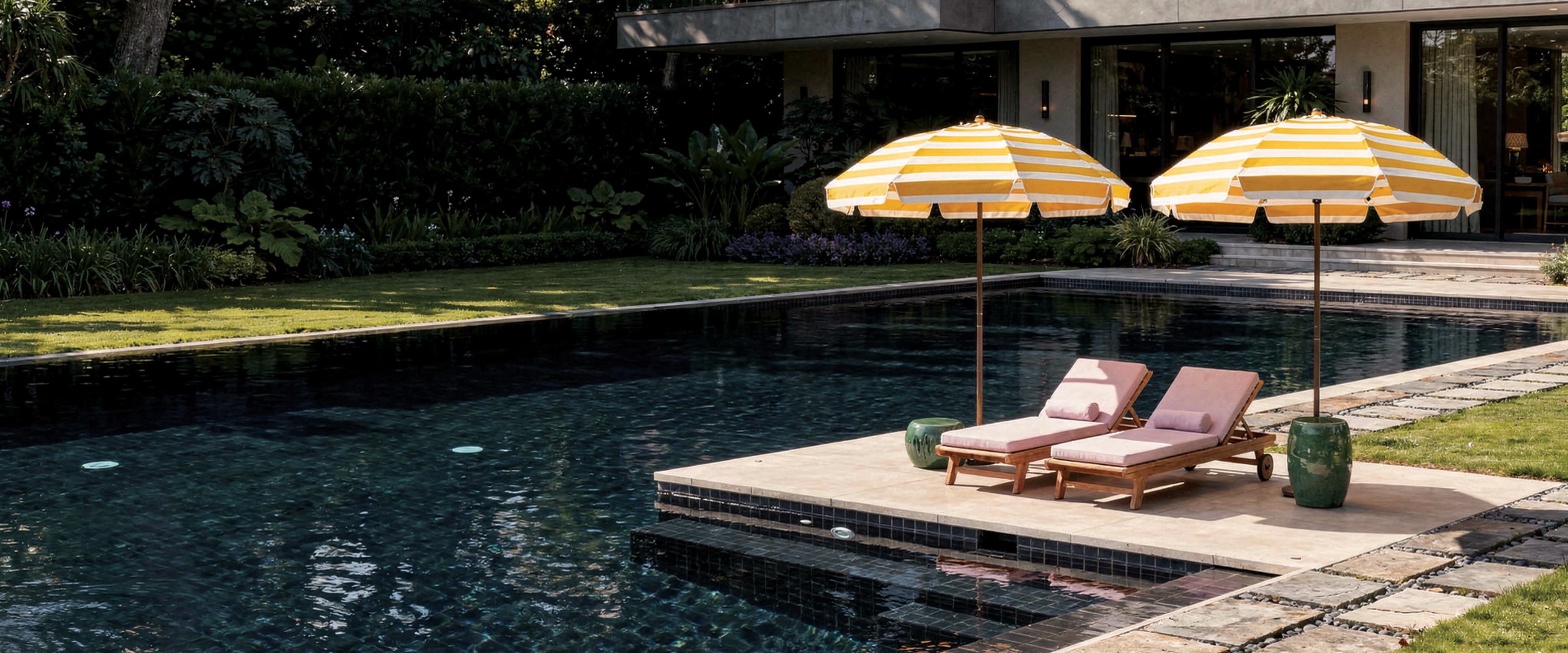
There are few better places for shade than the middle of a swimming pool.
That’s why sun shelves, tanning ledges and Baja shelves increasingly include built-in sleeves designed to hold an umbrella directly in the water. And naturally, that leads to one of the questions our team hears all the time: Can I put my Frankford Umbrella in a pool?
The short answer is yes—with a few important considerations.
Frankford umbrellas are not specifically designed or warranted for continuous in-water use. However, many customers successfully install them in pool ledges and sun shelves. The key is choosing the right umbrella and finish, understanding what prolonged exposure to pool water does to metal, and committing to some simple routine maintenance.
Here’s what you should know before taking the plunge.
First, Choose the Right Umbrella
For a pool ledge or sun shelf, we typically recommend the Frankford Monterey or Greenwich.
There’s a practical reason why: both feature a two-piece aluminum center pole.
When an umbrella spends time submerged in chemically treated or saltwater pools, the bottom section of the pole naturally takes the brunt of that exposure. With a two-piece design, that lower pole can be replaced independently if corrosion or pitting develops over time.
In other words, instead of replacing an otherwise perfectly good umbrella, you can simply replace the part that has spent its life underwater.
For umbrellas that will regularly or permanently live in a pool, we recommend thinking of eventual lower-pole replacement as routine preventative maintenance.
Pay Attention to Pole Height
A standard umbrella pole may not sit at the height you expect once several inches of it disappear into a pool sleeve.
For that reason, Frankford recommends ordering a bar-height bottom pole for pool ledge and sun shelf installations. At approximately 10 inches longer than a standard dining-height pole, it helps compensate for the height lost when the pole is inserted into the sleeve.
It’s a small specification that can make a significant difference in how the finished installation looks and functions.
What Happens When Aluminum Sits in Pool Water?
Here’s one misconception worth clearing up: Aluminum does not rust. But that doesn’t mean water can’t affect it.
While it won’t rust, Aluminum oxidizes. With prolonged submersion, particularly in saltwater or chemically treated pool water, you may eventually notice whitening, pitting, or small barnacle-like formations developing on the pole.
That isn’t necessarily dirt or staining waiting to be cleaned away. It can be evidence of the material itself beginning to degrade.
In many cases, early pitting is primarily cosmetic and does not immediately compromise the pole’s strength. But prolonged exposure without proper maintenance—particularly in saltwater—can eventually cause enough deterioration to weaken the pole.
Think of stainless steel the same way. It’s stain less, not stain never.
Outdoor materials are remarkably resilient, but no metal is completely immune to its environment.
Choose Your Finish Carefully
If you know your umbrella will be installed in a pool, the finish is another decision worth making intentionally.
Frankford recommends Brushed Silver (MS) or Silver Anodized (SR) for pool applications.
Unlike a powder-coated finish that sits on top of the metal, anodizing penetrates the aluminum surface itself. That makes these finishes less prone to chipping and more resistant to scratching—two useful characteristics when the pole will routinely be exposed to water.
Powder coating is highly durable in standard outdoor applications, but a deep scratch can expose the raw aluminum beneath it. Once submerged, that exposed area becomes more susceptible to oxidation.
Choosing an anodized finish gives the umbrella another practical advantage in an already demanding environment.
Saltwater vs. Chlorine: Does It Matter?
Yes, both of them matter.
Saltwater and chemically treated pool water can accelerate oxidation and surface corrosion. The longer a metal pole remains submerged, the greater the opportunity for pitting, whitening, and material deterioration to develop.
Saltwater environments deserve particular attention, but the important takeaway applies to either type of pool:
Putting metal in water changes the maintenance equation.
There isn’t a finish or umbrella pole that makes routine care unnecessary.
How to Maintain an Umbrella Installed in a Pool
The good news? Maintaining your umbrella doesn’t require an elaborate routine.
A few simple habits can significantly extend the life of the lower pole:
- Rinse it with fresh water several times per week. This is particularly important in saltwater environments.
- Remove the pole from the water when the umbrella isn’t in use, if possible.
- Allow the pole to dry completely before placing it back into the sleeve.
- Open the umbrella periodically and allow the entire umbrella to dry thoroughly.
If your umbrella will remain permanently submerged, pay particular attention to the condition of the lower pole. Regular maintenance can slow oxidation and pitting considerably, but some eventual deterioration should be expected with continuous in-water use.
What About the Warranty?
This is one area where we want to be especially clear.
Frankford umbrellas are not designed or warranted for continuous submersion, and submerging the frame voids the umbrella’s three-year frame finish warranty.
The structural frame warranty and fabric warranty remain unaffected. However, corrosion, oxidation, pitting, chemical damage, and any structural weakening or breakage caused by saltwater or chemical exposure are not covered under warranty.
In other words, choosing to install an umbrella in a pool doesn’t eliminate every warranty protecting the product—but damage caused specifically by its exposure to the water should be considered part of the responsibility that comes with an in-pool installation.
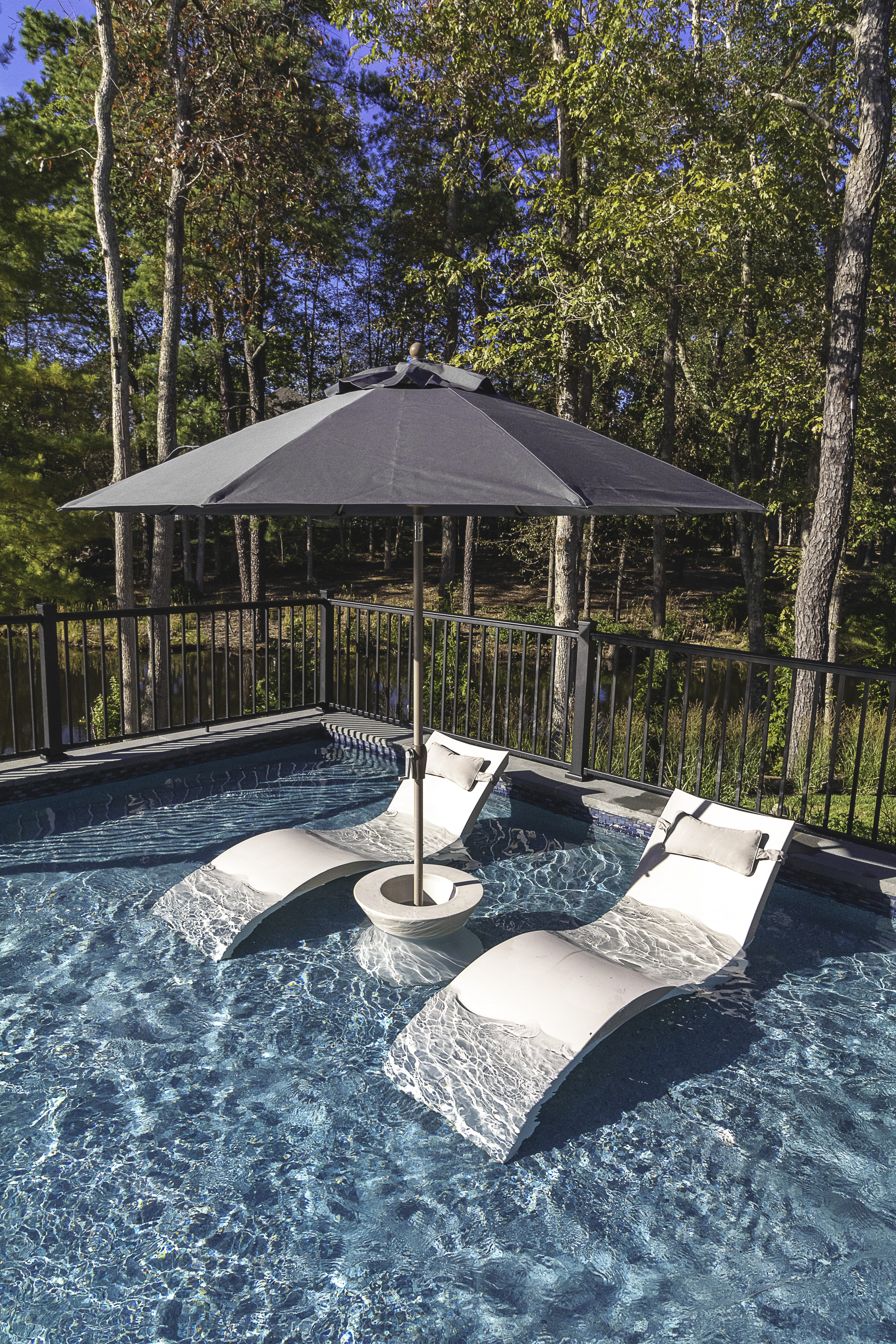
The Quick Answer: Can You Put a Frankford Umbrella in a Pool?
Yes. Plenty of Frankford customers successfully use their umbrellas on sun shelves and pool ledges.
Just go into the installation with the right expectations.
In summary:
- Choose a Monterey or Greenwich with a two-piece center pole.
- Consider a bar-height bottom pole to account for the depth of your pool sleeve.
- Opt for Brushed Silver or Silver Anodized when possible.
- Rinse the submerged portion regularly with fresh water and let it dry whenever practical
- Understand that prolonged exposure to salt and pool chemicals will eventually affect any metal.
Most importantly, remember that durability and maintenance go hand in hand.
Our goal is not simply to help you choose an umbrella that looks great over your pool. It’s to help you understand how to care for it so you can enjoy that shade for as long as possible.
Still not sure what your pool setup requires? Contact Frankford, and our shade experts can help you choose the right umbrella, pole, and finish for your space.